Stucco Contractor in Gerber, CA: Repair, Recoating and Wall Replacement | Chico Elite Stucco

Chico Elite Stucco is a stucco contractor serving Gerber, CA, with more than 15 years of experience working on houses and commercial buildings. We repair existing stucco, install portland cement plaster on new construction, and remove and replace failed wall sections when patching the surface would leave the underlying problem in place. Gerber was platted in 1910, its railroad yards opened in 1916 and operated until 1965, and many of the town's older houses were built during those decades. On an aging exterior, it helps to understand the condition of the wall before choosing between stucco repair, stucco resurfacing, stucco remediation, or a full stucco installation.

Before we quote an existing wall, we determine whether the problem is limited to the surface or extends into the wall assembly behind it. That way, the estimate is based on the cause of the cracking, staining, or deterioration rather than the visible damage alone. If the plaster is still sound, resurfacing or recoating may be enough to restore the exterior. If water has moved behind the finish, we open enough of the wall to see whether the affected materials can be dried and repaired or whether damaged sections need to be removed and replaced. In those cases, stucco remediation or removal and replacement may be necessary to protect the framing behind the plaster.

For new work, we install exterior plaster to California Building Code requirements. We also provide painting, recoating, stone veneer, decorative stucco work, and interior plaster. Our service area includes Chico and communities throughout Butte County, including Oroville and the ridge, as well as parts of Glenn and Tehama counties. To request a free estimate in Gerber, call (530) 783-7384 or use our quote form.

Get A Free Estimate

Why Choose Chico Elite Stucco for Gerber Stucco Work

When you ask a stucco contractor to quote a Gerber wall, you are really asking one thing: do they know what is likely behind plaster of that age before they cut into it? Chico Elite Stucco is a stucco company that works on older plaster in and around Gerber, and we read the age of the wall and the state of its finish before we say what the work is.

We have more than 15 years of stucco experience and are licensed and insured.

Three things go in writing, and they are the three that shape your estimate.

  • We carry general liability and workers' compensation coverage.
  • We write free estimates instead of leaving the scope as a verbal description.
  • We identify whether three-coat stucco, the finish coat, or both need work before we price the job.

A written scope matters because stucco work can look small at the surface while the loose or wet material extends farther under the finish. The document gives you the repair area, the surface work, and the finish plan before crews begin.

To start a free estimate, call (530) 783-7384 or use the quote form.

We also work as a stucco contractor in Red Bluff.

Stucco Contractor Services for Gerber, California

A Gerber address narrows the same stucco services to the wall in front of us, the access around it, and the age we already know before we price the work. Each service below starts with what you need the stucco contractor to decide.

Stucco Painting & Coatings

Spraying a coating onto a prepared stucco wall

Color fades on a Gerber wall long before the plaster underneath fails, so we recoat the wall you have rather than replace a sound finish. We check that the wall is dry before we apply stucco painting and coatings, because a coating renewed roughly every seven to ten years should not trap moisture behind it.

Stucco Installation

Plasterer applying a stucco finish coat to an exterior wall

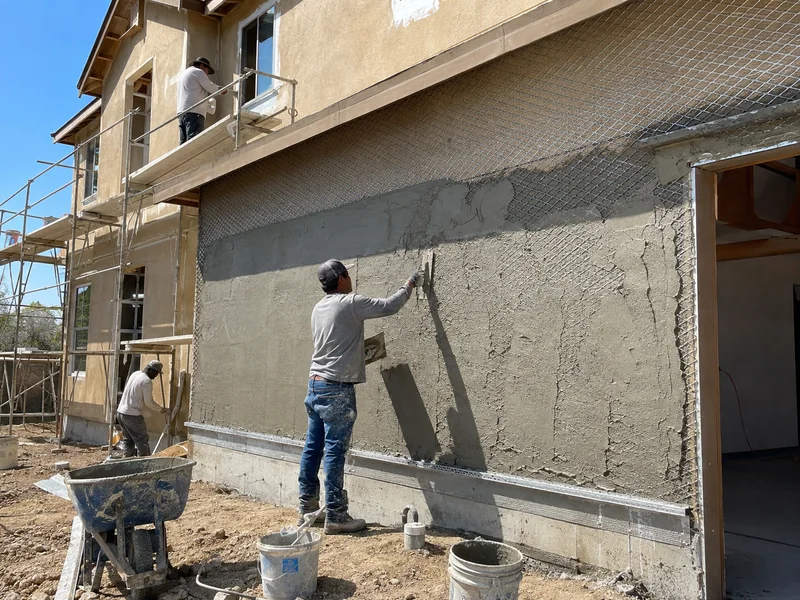
On a Gerber addition or outbuilding we build a new wall in three-coat stucco: a first coat pressed into the lath, a second that brings the wall flat and true, and a finish coat that gives the color and texture you see. That takes several visits, so we book stucco installation around the required moist curing, where plaster is kept damp while it gains strength, and around the waiting time before the next coat.

Residential Stucco

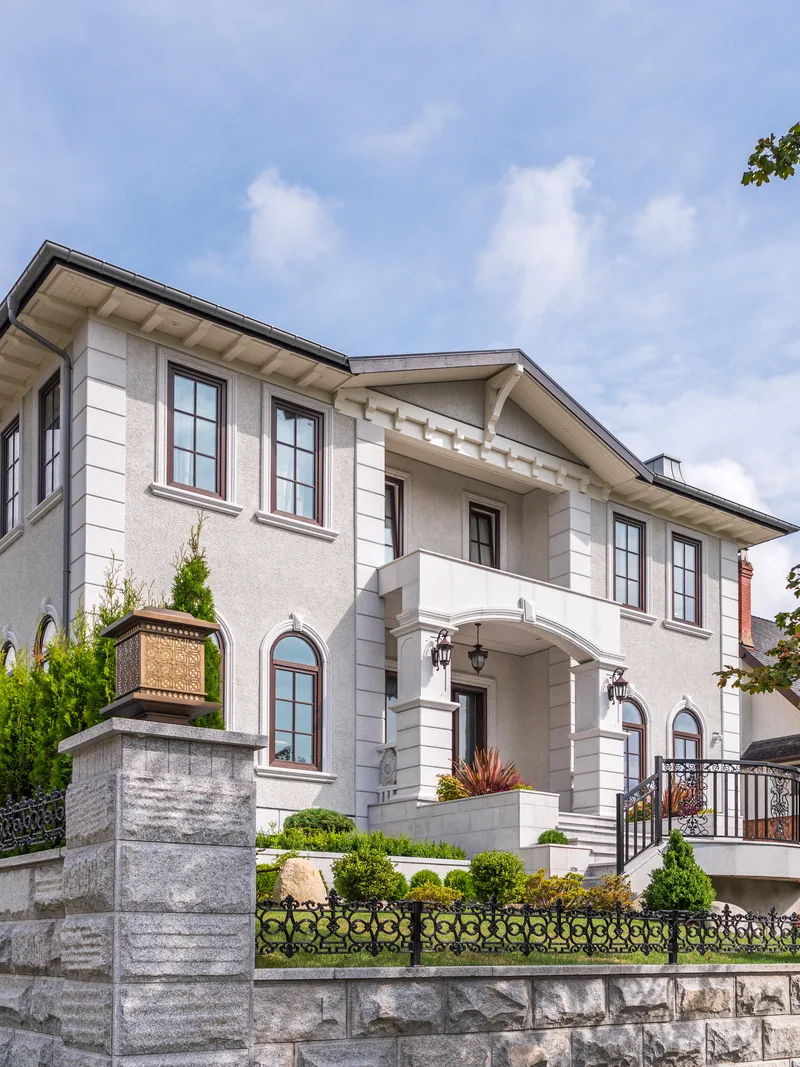
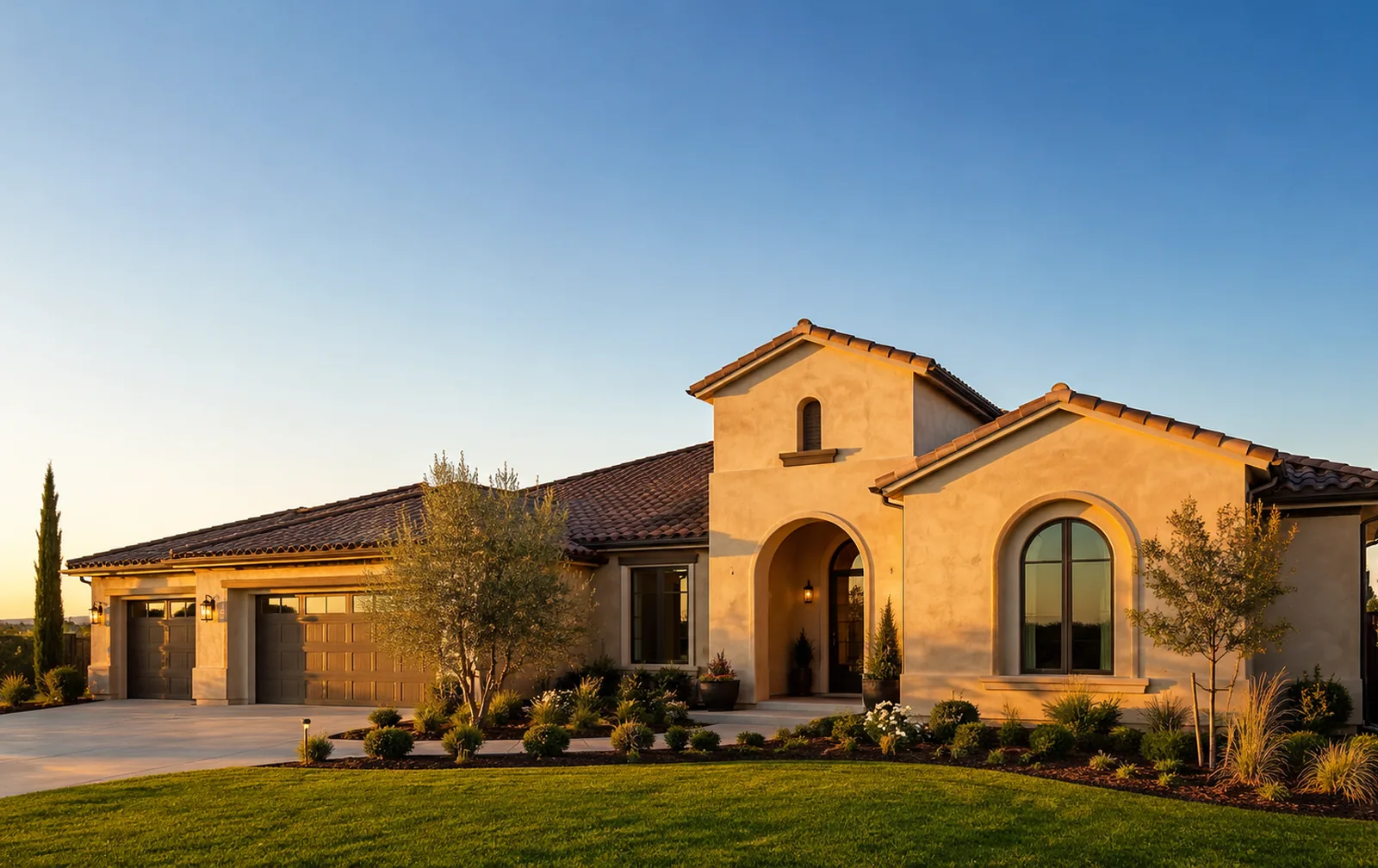
Pale yellow Spanish-style stucco home behind a lawn and front path

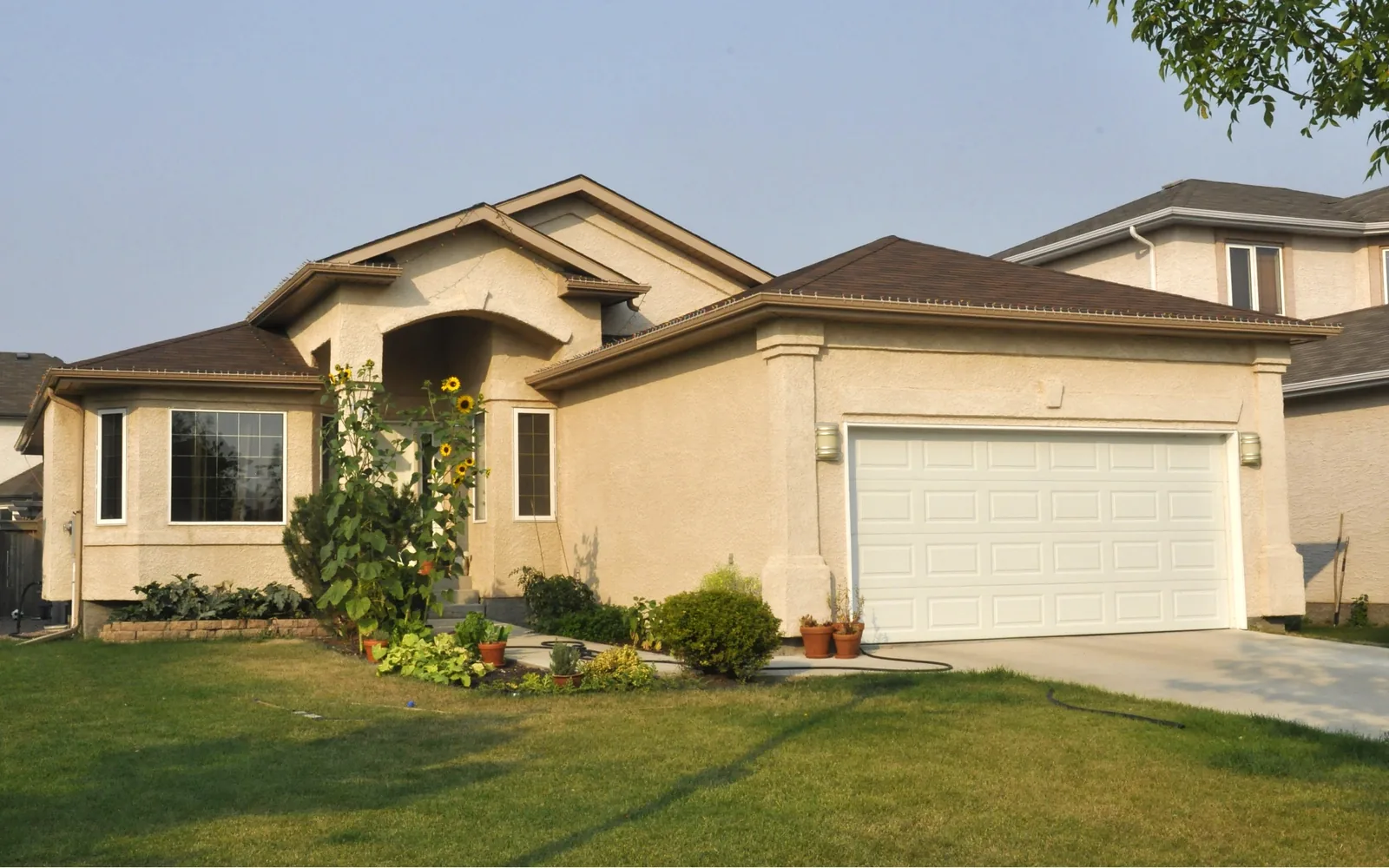
Most of our residential stucco in Gerber is ordinary house work on one- and two-story homes that people are living in while we are there. We open one wall at a time and leave each elevation weather-tight at the end of the stage.

Stucco Repair

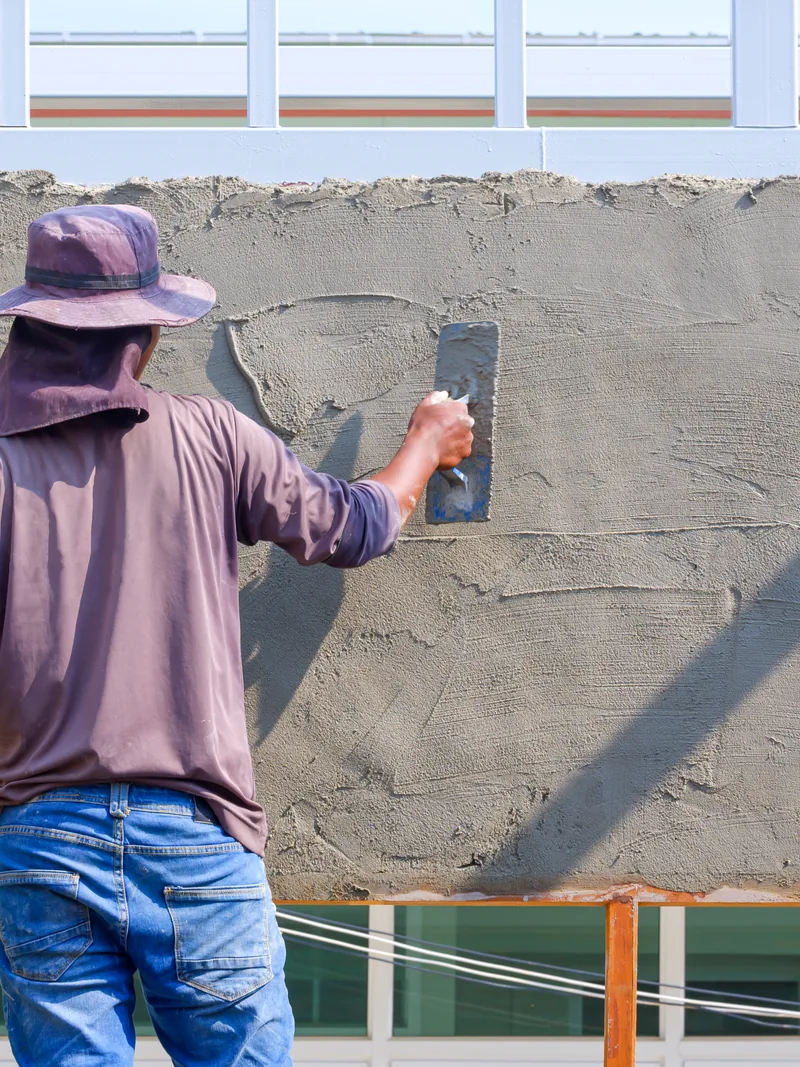
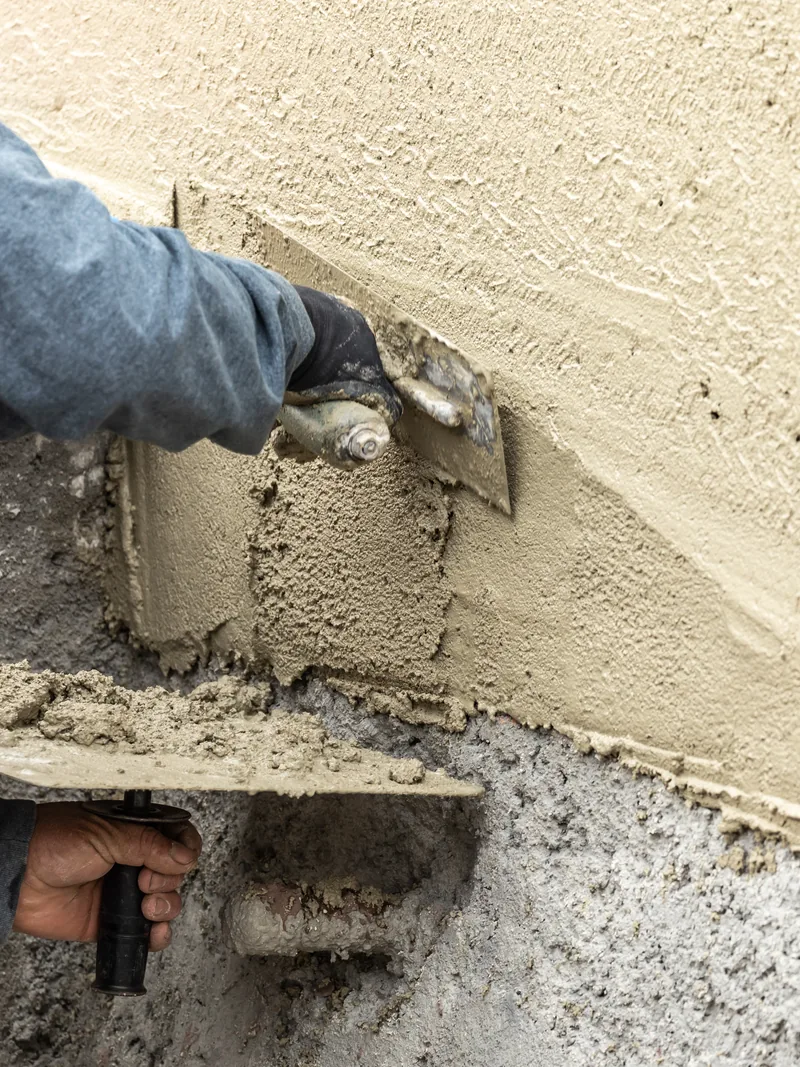
Gloved hand troweling a patch onto an olive-toned stucco wall

You need stucco repair where the damage is confined to one area of an older Gerber wall. We cut back until the plaster and the lath behind it are sound, then stop the repair at a corner or joint instead of ending in the middle of the wall.

Stucco Removal & Replacement

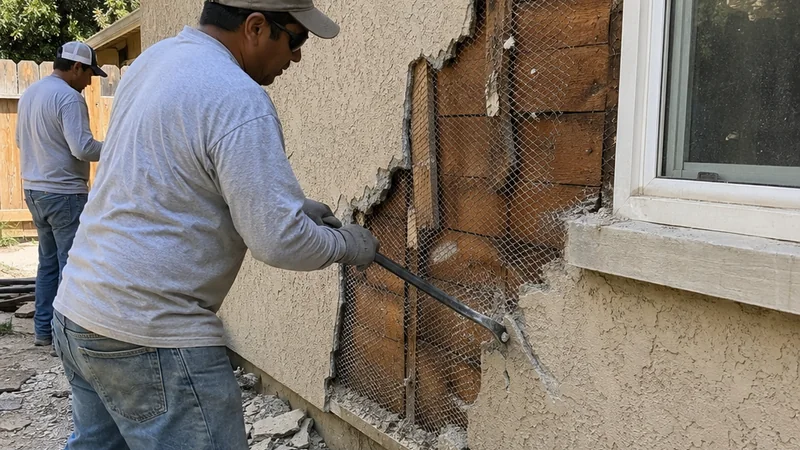
Cutting failed stucco away to expose the lath behind it

Where the plaster has gone past repair, we take the elevation off and rebuild it, and that is stucco removal and replacement. As we remove the failed area, the exposed material shows what the rest of the house may have, so new lath and new paper go on before new plaster does.

Stucco Remediation

Working new plaster over a moisture-stained wall

Stucco remediation starts when water has gotten behind the plaster on a Gerber wall. We open the area needed to reach the water-resistive barrier, the layer behind the plaster that sheds water, and where mold is visible, a qualified independent specialist handles that assessment because testing and removal are their own trade.

Commercial Stucco

Scaffold set along an elevation for plaster work

We do commercial stucco in Gerber mostly on shop fronts and light industrial frontage near the rail side of town. We settle access, dust control, and scaffold placement before crews begin so a business can keep its doors open during the work.

Stone Veneer & Stucco

Home combining stone veneer with a stucco exterior

Porch bases, columns, and chimneys are where stone veneer and stucco meet. We set adhered stone, the thin stone fastened to the wall face, over the same lath and water barrier planning that supports the surrounding plaster.

Stucco Plastering

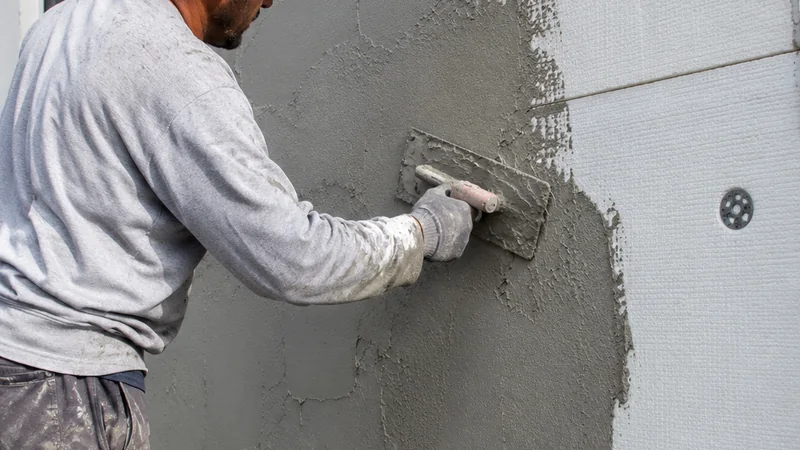
Troweling plaster onto a prepared wall

On the inside face of the same Gerber house, stucco plastering is the interior plaster on walls and ceilings. We patch new plaster back into the surrounding surface and schedule the work around the rooms you still need to use.

New Construction Stucco

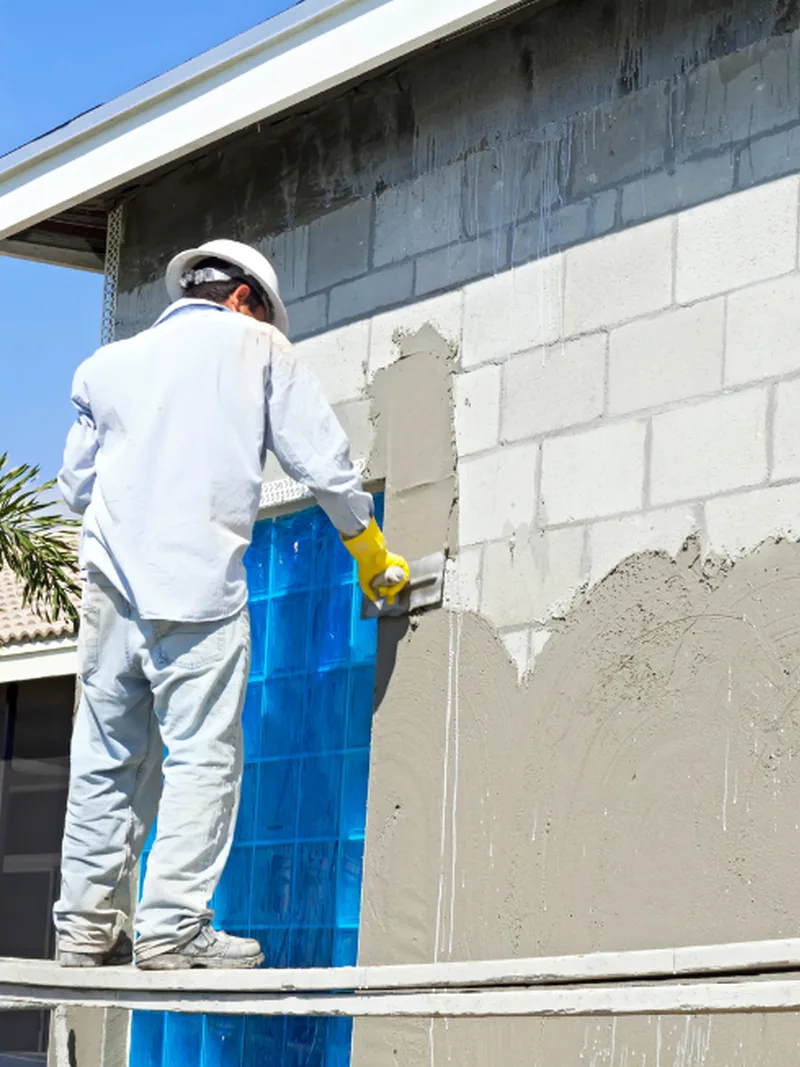
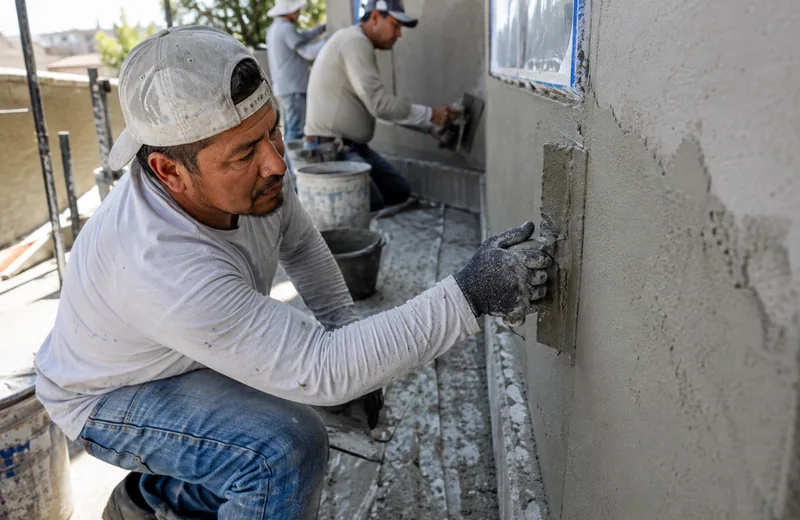
Worker plastering a wall from a scaffold platform against a blue sky

Once framing and sheathing are ready on a new build or a new wing, we start the new construction stucco. We install lath and paper, then call for the lath inspection before the plaster coats begin.

Decorative Stucco

Cream stucco home with ornamental window surrounds behind a lawn

We use decorative stucco for bands, trim, and shaped detail on a period elevation. We make a profile, which is the shape repeated along the wall, and match the existing detail instead of adding a new shape.

Interior Stucco

Plasterer smoothing an interior wall with a trowel

We finish an inside wall or a fireplace surround with interior stucco, a plaster surface left as the visible finish. We use gypsum plaster where the room calls for it and protect the floors and nearby rooms before we start.

Stucco Resurfacing

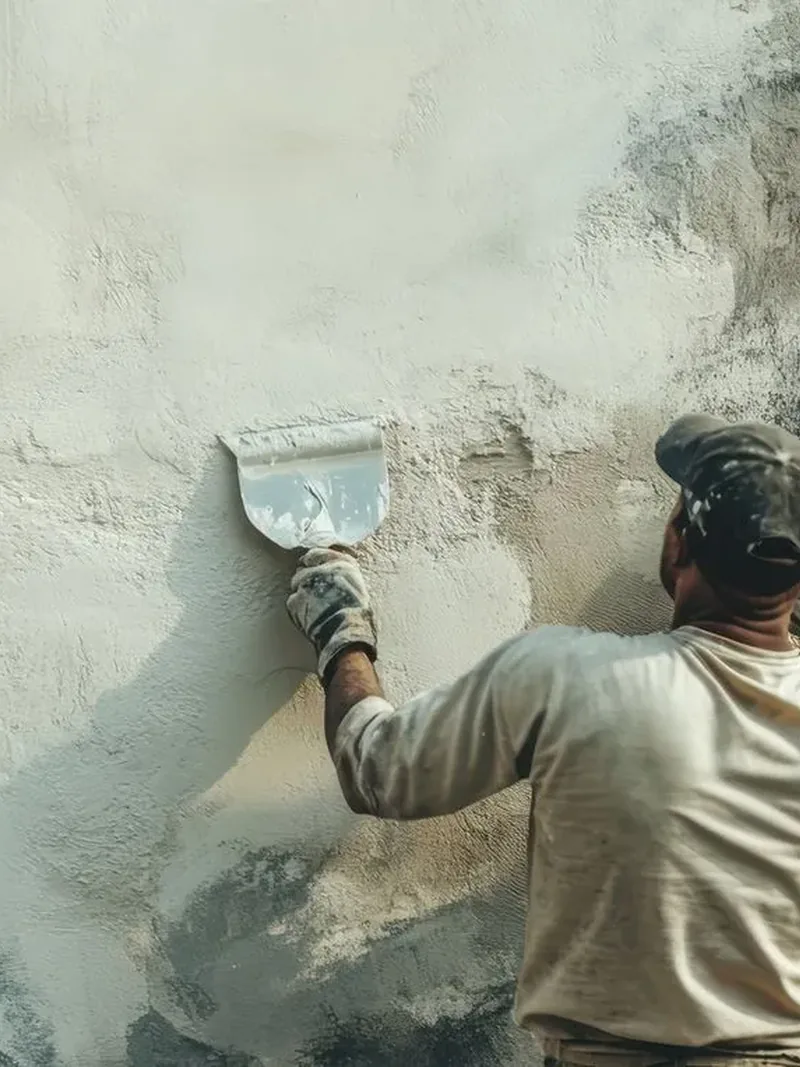
Gloved hand drawing a float across a white stucco wall

A worn or patchy texture over sound plaster is where stucco resurfacing fits. We sample the new finish coat on the wall before we commit the whole elevation, because texture has to meet the old surface in daylight.

What a Stucco Contractor Faces on Gerber Walls

The rail yard worked for half a century, and nearly all of the town's older housing dates from that span, which gives a stucco contractor a useful starting point. The first question on a Gerber job is how old your house is, because the era narrows what a stucco specialist expects behind the plaster before we open the wall.

One-coat stucco base applied in a single pass

Reading the Build Era Before the First Cut

The backing under stucco changed over the decades. Lath is the backing that wet plaster grips as it hardens. Wood lath is thin strips nailed across the framing with gaps between them, so the first coat squeezes through and hardens behind the wood. Expanded metal lath and welded wire lath are metal sheets the plaster wraps instead. Those backings differ when we tie in a stucco patch, because old wood strips split and pull loose where metal usually does not.

A known era does not prove what any one wall contains, but it tells us what to look for and how much risk belongs in your quote. If the existing backing cannot hold a clean patch, the price and the scope have to change before the wall is open, not after the damaged area has been cut out.

What Sits Between the Plaster and the Sheathing

The barrier behind the plaster and the base of the wall are where an older elevation can differ most from a new one. Sheathing is the wood-based surface under the wall covering, and the current exterior plaster requirement over it is either two independent layers of ten-minute Grade D paper or one sixty-minute layer.

Grade D paper is a water-resistive barrier, which means it helps shed water that gets behind the plaster. Each layer has to form its own continuous drainage plane, the path water can follow down and out, and the weep screed at the bottom of the wall must sit at least four inches above the earth and at least two inches above paved surfaces.

About Gerber, California

Your Gerber address sits in a town platted in 1910 by the Gerber family, which owned the town site, and a post office has served the community since 1916. Southern Pacific ran a division point here from 1916 to 1965, and the Southern Pacific rail yard handled locomotive fuelling, repair, and crew changes while livestock yards and an icing plant served rail traffic.

Main Street runs through the middle of this unincorporated Tehama County town. Gerber station was one of the original stops when Amtrak's valley route began in 1971, and trains stopped calling there in March 1972; Gerber Park sits on Mariposa Avenue under county operation, and the junction of the West Valley Line and the East Valley Line sits about two miles south.

A few miles down the road in Tehama stands the First Tehama County Courthouse, a California Historical Landmark. Gerber itself is the smaller place: Main Street, the houses around it, and the ground the rail yard used to occupy.

Where We Work In and Around Gerber

Las Flores, Proberta, and Tehama are nearby Tehama County communities, not districts inside Gerber. All three sit within three miles, so if your property is in one of them we can group the work with a Gerber run without treating the places as the same town.

Las Flores: Patching and Recoating on Railroad-Era Walls

Las Flores and Gerber were one census place, Gerber-Las Flores, until the two were split in 2010. Las Flores also began in 1916 as a railroad community in its own right, so its walls are the same age as much of Gerber's. Stucco patching there means cutting back to plaster that is still hard and matching the new texture to the old; recoating then carries one color across patch and wall, so the repair does not show as a lighter square.

Proberta: Removal and Replacement on Older Farm Houses

Proberta was laid out in 1886 and has had a post office since 1888, so its oldest farm houses predate Gerber by a generation. Where your wall there is too far gone to patch, we strip it back to the framing and put on new stucco. That opens the timber for the first time in decades, so a sill or stud the water reached is treated before the new finish goes on.

Tehama: Base-of-Wall Work on Houses Raised Above the Flood Line

Tehama sits on the west bank of the Sacramento River, was incorporated in 1906, and is generally the first part of the county to flood in the rainy season. Because a city ordinance there requires houses to be raised above flood level, high foundations and tall front steps leave a taller run of wall above the earth, where we read the foundation and weep screed detail.

Written stucco scope and estimate on a clipboard Crew applying a stucco finish coat to a wall

Gerber Property, Access and Local Conditions

Stucco services in Gerber are quoted around two practical questions: how we reach your wall, and how we schedule the work from Chico. The wall may be the trade issue, but the lot and the calendar decide how the job is set up.

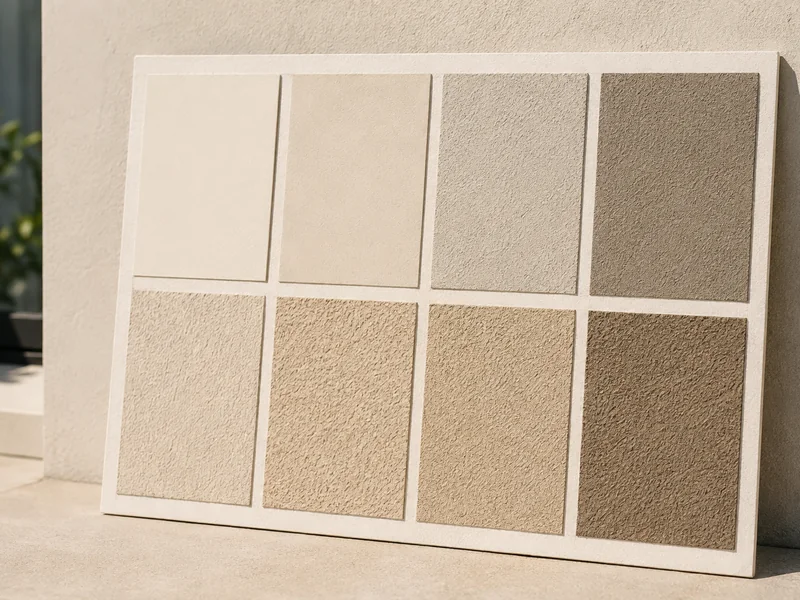
Sample board of stucco textures and colors

Getting at a Wall on a Gerber Lot

The yards left a compact grid behind them, with houses near the road and outbuildings behind many lots. The front elevation is usually straightforward to reach, while the back wall can be blocked by storage, fencing, or a shed.

We walk the whole perimeter before quoting rather than pricing the job from the street. Anything stored against your back wall has to move before we can repair, coat, or replace that surface, so access belongs in the estimate instead of becoming a surprise on the first workday.

Scheduling a Job in a Town This Size

A Gerber job is planned in blocks instead of daily trips, and materials come in one delivery when the scope is set. A change of finish partway through can cost a day because the crew and the material order both have to be reset.

For exterior three-coat stucco, the California Building Code sets minimum curing intervals. Each of the first two coats gets at least 48 hours of moist curing, the second coat goes on no sooner than 48 hours after the first, and the finish coat goes on no sooner than 7 days after the second. Those are minimums, not a promised job length.

Permits and Inspections for Gerber Stucco Work

Gerber has no town permit counter, so stucco paperwork comes down to two questions. The first is who signs off the work, and the second is what the county can already tell you about the house.

Who Permits and Inspects Work Here

Unincorporated Gerber goes through Tehama County Building and Safety, and that county counter is in Red Bluff. The county confirms whether a particular building permit is needed, rather than a contractor deciding that question for your property. Your first call on a Gerber job goes to that department, and the permit is opened before we are on the wall.

Lath, paper, and flashing are inspected while they are still visible, and that visit sits inside the job rather than after it. The wall stands open and the plaster coats wait on the inspector, so a date missed there stops the work where it is instead of being caught up at the end. The Contractors State License Board defines the C-35 Lathing and Plastering classification around lath, metal stud channel work and plaster coatings.

Quoting a House the County Has No File On

A railroad-era house may predate the drawings or prior permit records that would explain what is behind the wall. That absence changes how stucco repair is priced, because the estimate has to leave room for what the wall reveals once the failed area is reached.

Pre-1980 construction gets tested for asbestos and lead before anything is disturbed. After material testing is cleared and the wall information is known, what we find goes into the written scope instead of staying as an assumption in the estimate.

Stucco Inspection on an Older Gerber House

A stucco inspection on an existing Gerber wall is a condition assessment, not the county inspection for new work. A stucco specialist looks at the wall you already have and writes down what the visible conditions show.

What an Inspection Can See, and What It Cannot

From outside, we read the finish coat, the base of the wall, the joints, the openings, and the places where water has been running. Flashing is thin metal or another formed material that directs water away from an opening or joint, but much of it may be hidden once the plaster is complete.

The lath, the paper, and concealed flashing cannot be seen from the surface because the scratch coat covered them when the wall was built. For that reason, an older wall is quoted on what the stucco inspection finds, and you receive a written account of what was seen and what those conditions mean.

When an Older Gerber Wall Is Worth Looking At

A wall is worth looking at before you buy a house of this vintage, when a stucco coating starts to fail, or when a crack changes instead of staying the same. Those situations do not prove the wall has failed, but they give the inspection a clear reason.

A properly installed three-coat stucco system can last 50 years or longer, while coatings are usually renewed every seven to ten years. That means a Gerber wall can still be sound even when the finish over it has reached the end of its useful life.

Plastering an interior wall around a window in an occupied room Crew applying a scratch coat over lath on a house under construction

Stucco Questions From Gerber Property Owners

Our house went up in the railroad years. What is likely to be behind the stucco?

The era narrows what we expect, which is why we ask the age first. Wall thickness at a door or window casing is another tell of the system on the house, and we read it on the walk round before anything is opened or priced.

Do you work on houses in Gerber, or only pass through on the way to Red Bluff?

Yes. Gerber sits on the same Tehama County run as the towns around it, which is what makes a small job there workable, and it means we can come out for one cracked elevation rather than only for a whole-house job.

Can you match a texture on a house when the original finish is no longer sold?

Usually, yes, but the match is settled on a sample before anything goes on the wall. A discontinued finish is matched by making samples rather than by ordering the old product, and we record the pigment information used on the sample you approve.

Who do we deal with for a permit on a Gerber property?

Tehama County handles that because Gerber is unincorporated. The county sets the inspection date rather than us, so we build it into the schedule, and the permit stays open until the county signs the work off.

How do you schedule work this far from Chico?

We schedule Gerber work in blocks, with the dates agreed before we start. You get those dates in advance rather than being fitted around other work, and a block means the crew stays on your wall through each stage instead of driving out for an hour at a time.

Is it worth repairing an older wall, or should the whole elevation come off?

That depends on how much backing is still sound, not on how the finish looks. We make that call elevation by elevation rather than for the whole house, because one wall is exposed to weather and sun that another never sees.

Get a Free Stucco Estimate in Gerber

A visit from Chico Elite Stucco settles the age of the Gerber wall, what the surface is showing, and what those facts do to the number. You get a free written estimate from a stucco contractor before the work starts.

To schedule, call (530) 783-7384. Call or use our online form now for a free estimate.